Why Do I Homeschool You Ask? Wait, Why Do You Send Your Kids To School?

Cool Pappa's avatarCornerstoneDad

It is time for me to come out of the closet here at CornerstoneDad. My wife and I homeschool our children. There, I said it. I know, I know, you probably have a ton of questions and they are well meaning. However, some of you do not have true questions, but criticisms about a decision we made for our family.

I do not know why. I would never ask you if your kids attend government schools and then go on to ask more questions in a condescending way. But there is so much on this subject that I will write about in the future. So first, I will kick off my “coming out party” with the greatest article that I have found for the critics.

Enjoy!

Source: http://www.secular-homeschooling.com/001/bitter_homeschooler.html

The Bitter Homeschooler’s Wish List

by Deborah Markus, from Secular Homeschooling, Issue #1, Fall 2007

1 Please stop asking us if…

View original post 1,054 more words

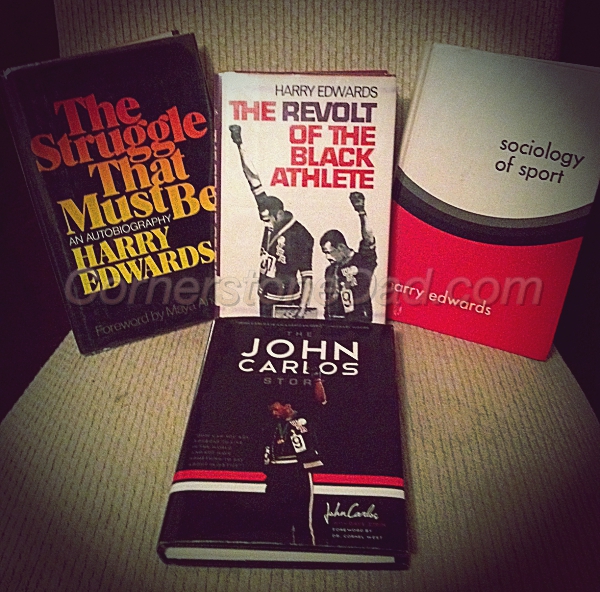
Homeschool Lesson Of The Week: Dr. Harry Edwards Talks Trump, Kap and Scholarly-Activism

Dr. Harry Edwards is in the Edge of Sports house!

Malcolm is gone. MLK is gone. Ali is gone.

But a man who deserves to be right up there with them in my opinion (as he is one of my never-met-mentors) can be heard below on the Edge of Sports with Dave Zirin.

While this is one of Dr. Edward’s shorter interviews on the Edge of Sports, the fire is just as fierce and one I recommend having the kids sit down and listen to if you are wondering:

“What do I tell them about this country after the election?”

“How should we look at today and tomorrow?”

“Does it really matter if you vote or not?”

This is a terrific homeschool lesson for kids 10 and up who can have a bit of an understanding and really know who Colin Kaepernick is and the controversy and conversation surrounding his stance on standing for the so-called National Anthem. Dr. Edwards even gives his opinion on whether he thinks Kap was correct by not voting and stating his position publicly.

If you use this lesson for History, Sociology, Psychology, Civics or anything else, definitely let us know we would love to hear the kind of questions the kids asked and where the conversation went.

The TeachThemRight.me Radio Show – Episode #4: Lessons I Learned From The Presidential Election For Our Homeschool

Check it out, Episode #4 is HERE!

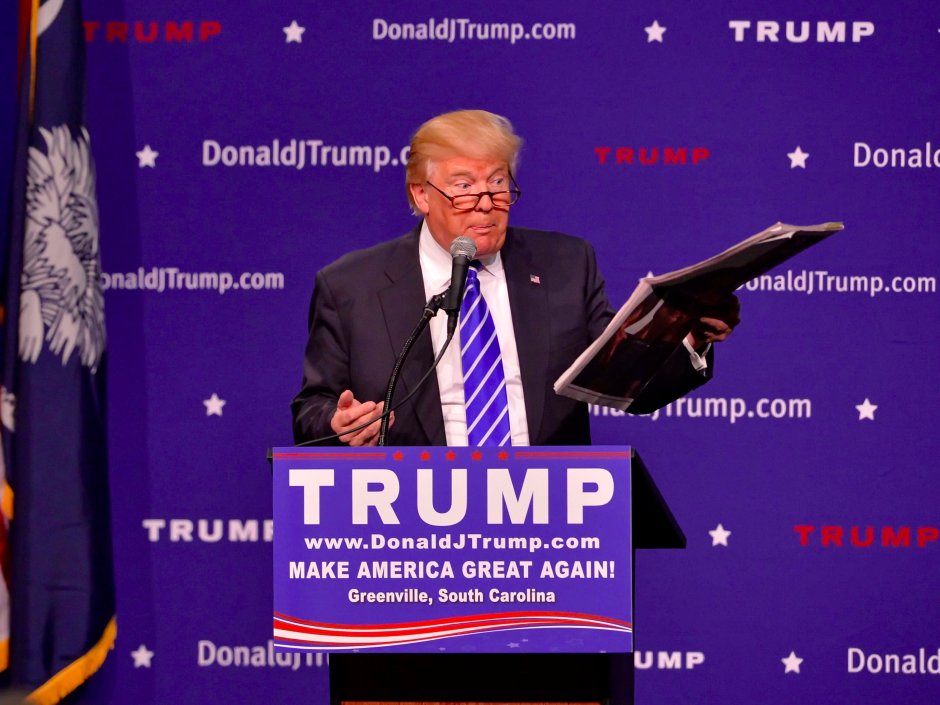
trump

In many homes, there was lamenting, shock, and awe. But may I encourage us all to take this opportunity to gather the family together and come up with a strategy on how to navigate over the next four to eight years. Neely Fuller gives nine areas of activity that make a perfect starting point for the discussion. A family strategy in these areas will go a long way towards making your family “politic proof”. Mental freedom isn’t given by the White House, but in Our House.

1. Economics
2. Education
3. Entertainment
4. Labor
5. Law
6. Politics
7. Religion
8. Sex
9. War/Counter-War

Frances Cress Welsing passed away Jan. 2016, but she lived just long enough to understand what was going down. Which is why I’m baffled as to why some are shocked. She understood how real race-baiting goes down.

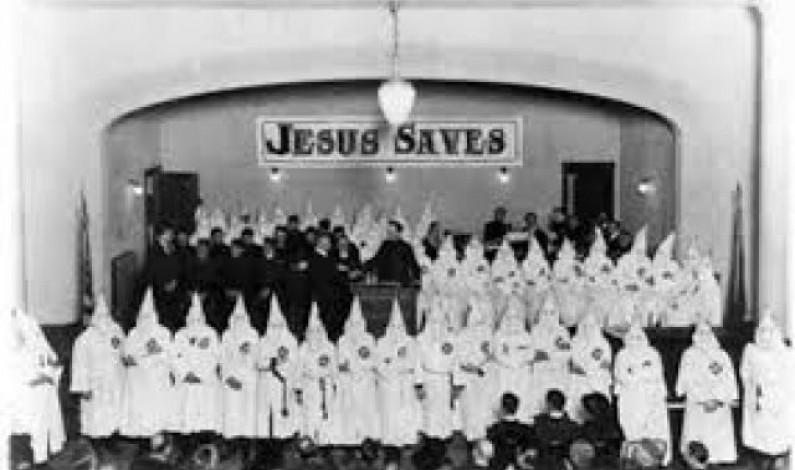
Evangelicals are now talking prayer and unity. But please know, that if you research the so-called evangelical church in America, one group, and it wasn’t the “black-side”, was more than happy with the divide. This is why as a group the majority was in support of (as they point out with abortion, silence, is support) Jim Crow segregation, the KKK, segregated churches, institutional racism, sexism, etc..

Sadly, it would have made my heart glad to see evangelicals not support either candidate and I would have had respect for that decision. But I have to wonder, since we like to say, “lesser of two evils”, if the decision was between the Anti-Christ and the False Prophet, which do you choose? After Tuesday, all of the Left Behind Pre-Trib loving folks seemed to just “take the mark”, letting an evil system (logically, how can you have evil choices but a good system?) dictate their choices, something I’m sure they claim they’d never do.

The New…Furious Styles

The Teach Them Right Radio Show – Episode #2: The Church and Racism Forum Discussion

kkkandjesussaves

Finally, show #2 is >>>HERE<<<!

Okay, and since it took me so long to get another out, how about a special treat. I had the pleasure to serve on a forum discussing Christianity and race recently and I want to share it with you. However, most importantly, I had a chance to share it with my kids! All four were in attendance and as you can hear, what we discuss at home, gets discussed in public as well.

It was a fantastic panel and definitely set the stage for future meetings, but you are about to hear part one of an upcoming four-part series.  I this episode, we kick off discussing:

  • The role the Christian church plays in the racial discussion going on in America
  • Is it okay for churches to split on preferences?
  • Is there a problem hanging out with people just like you?

Enjoy and feel free to leave us a comment below and be sure to leave a review on iTunes!

Cool Pappa


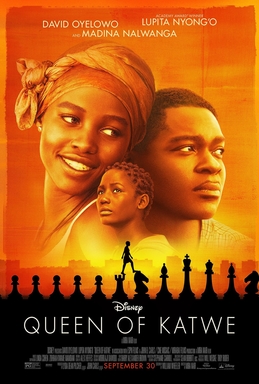
Disney’s Queen Of Katwe

Last Friday I went to see the movie Queen of Katwe on the day it came out. My interest for the movie started when I saw a poster while at the movies to see another film. So let me tell you my thoughts on the movie.

For those who don’t know, the movie was about a girl named Phiona Mutesi who lived in the city of Katwe which is in Uganda, and how she gets through troubles in life while playing chess. Her coach, Robert Katende saw that she had potential, so he started to take her to chess competitions. I do not want to spoil the movie, but there were some parts of the movie I liked and parts I didn’t.

One of the things I liked about the movie was that there was no “white savior”, meaning a so-called white person that came in to help/rescue the so-called black person. Phiona was helped by her coach and later on in the movie she was helped by her mother. I also liked that there were many non-white people in the movie. Most movies will have a non-white person as the main character but will also have a so-called white person running things in the background of the movie. Most of all I loved that it showed what an African woman can do and the knowledge possessed by many of the children in Africa. I am sure that there are many more children who are just as smart a Phiona but do not have the opportunity she had.

Now things I did not like about the movie. In the movie the mother of Phiona (who is the main character) is not married (because her husband died of AIDs when Phiona was 3 years old, which is something they didn’t mention in the movie). Throughout the movie, her mother is having trouble paying for rent and food, so women are telling her that she should get a husband that will pay her rent. This made me irritated because it made it seem as though every woman needed a man to take care of them. Also, the film only showed the city of Katwe, which fits the stereotype about many African cities. Dirty roads, barely standing houses made out of wood planks, garbage everywhere, and crowded streets. The movie could have shown other parts of Africa that weren’t as bad as Katwe, or it would be nice to have more movies showing other cities in Africa that do not fit the stereotype.

home003px

Above is the city of Katwe

port_louis_03_480

The city of Port Louis which is the capital of Mauritius


In summary, The movie met my expectations. There were some things I didn’t like, but the part of the movie I really liked was how at the end they had the actors line up with the people they were acting for in the movie. So you get to see what the person looks like today. I think it was worth the money to see, and I encourage other people to see it too.

3 Facts About The Emancipation Proclamation

For my school work last week I had to do research on the Emancipation Proclamation. I had never really considered researching the Emancipation Proclamation before, so I learned something new during this research. When most people think of the Civil War they remember a war that was fought over states rights, but is that really true? Did the Emancipation Proclamation get signed on January 1, 1863? Did President Abraham Lincoln really care about the slaves? When I looked up the Emancipation Proclamation I found answers to questions I didn’t even know, and I would like to share them today.

1.  Did Abraham Lincoln care about the slaves?

From my research, I have concluded that Abraham Lincoln didn’t really care about the slaves. According to History.com, Lincoln said in 1861 during his inaugural address that he has, “no purpose, directly or indirectly, to interfere with slavery in the States where it exists.” He said this a little less than two months after the Civil War started. So at the beginning of the Civil War, Abraham Lincoln could care less about the slaves, what he was focused on was winning the war.

2. Was the Civil War all about states rights?

Based on my research, the Civil War was fought over the owning of slaves. When the war was going badly for the Union, Lincoln had to come up with a solution. Lincoln realized that the Confederate side was using slaves to help fight the war, and when slaves started running to the Union side for safety, Lincoln had to figure out what to do. So Lincoln enacted two laws:

1.)  one law freed slaves who are engaged in the rebellion against the United states, and

2.) another law said the president had the power to use freed slaves in the army even as soldiers.

This, of course, freed the slaves that were involved in helping the Confederate side, and Lincoln had the power to make the freed slaves soldiers for the Union army. So the freed slaves were not entirely free. By this time, Lincoln wanted the Emancipation Proclamation to free all slaves in Confederate states, so he talked it over with his cabinet. According to History.com, Lincoln quoted that it has now become “a military necessity…. We must free the slaves or ourselves be subdued.” But Secretary of State William H. Seward told Lincoln to wait until a major Union military victory was done. So Lincoln waited until the Battle of Antietam, then on January 1, 1863, the Emancipation Proclamation took effect.
harris_fig01a

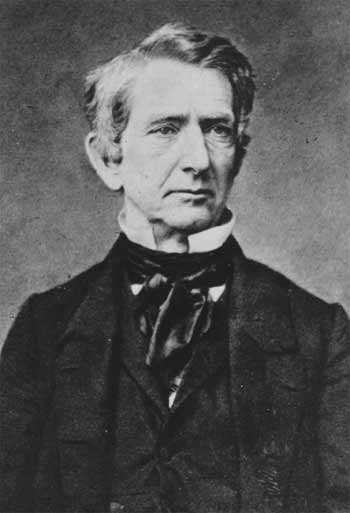
This is Secretary of State William H. Seward.

3. When did Abraham Lincoln issue the Emancipation Proclamation?

I found out that Lincoln first said that the Confederate states had to free their slaves from September 22, 1862, to January 1, 1863. But of course, the Confederate states said no, so Lincoln signed the Emancipation Proclamation on January 1, 1863. The Emancipation Proclamation was actually declared on September 22, 1862.

What I have told you today are things I have learned recently myself, and I find this information to be a big part of American history and should be taught. America can celebrate their meaningless holidays like Halloween and Valentines Day, why do we celebrate these holidays. Halloween is basically all about candy, and you should show your love for someone every day of the year, not just one day. My family will celebrate something that shaped how we live today.



The College Writing Series: Translating Your Evidence

Now that we have gone through the first step of the essay process (picking evidence), it’s time to analyze your evidence. As I’ve said in past posts, college writing is about creating your own insight, rather than writing about other individual’s insight (for example, writing a book report). Professors do not want a review of the reading, they want to know what you thought about it. Being able to present your thoughts in an organized, easy-to-understand manner will earn you the better grade.

“How do I go about analyzing my evidence,” you ask? In CEA format, there are three steps:

Continue reading “The College Writing Series: Translating Your Evidence”

The College Writing Series: How to Pick Great Evidence For Your Essays

A few weeks ago, I started the first true series of Teach Them Right, called The College Writing Series. My first post for the series gave a very brief overview of the format I will be using (CEA – Claim, Evidence, Analysis), and what to expect in future posts.

Now on my second post of this series, I would like to touch on the first step of writing a college-level essay in CEA format, picking evidence for your paragraph. By picking your evidence before doing anything else, you are able to form your argument based off of the evidence instead of picking evidence that fits your argument.

Continue reading “The College Writing Series: How to Pick Great Evidence For Your Essays”